
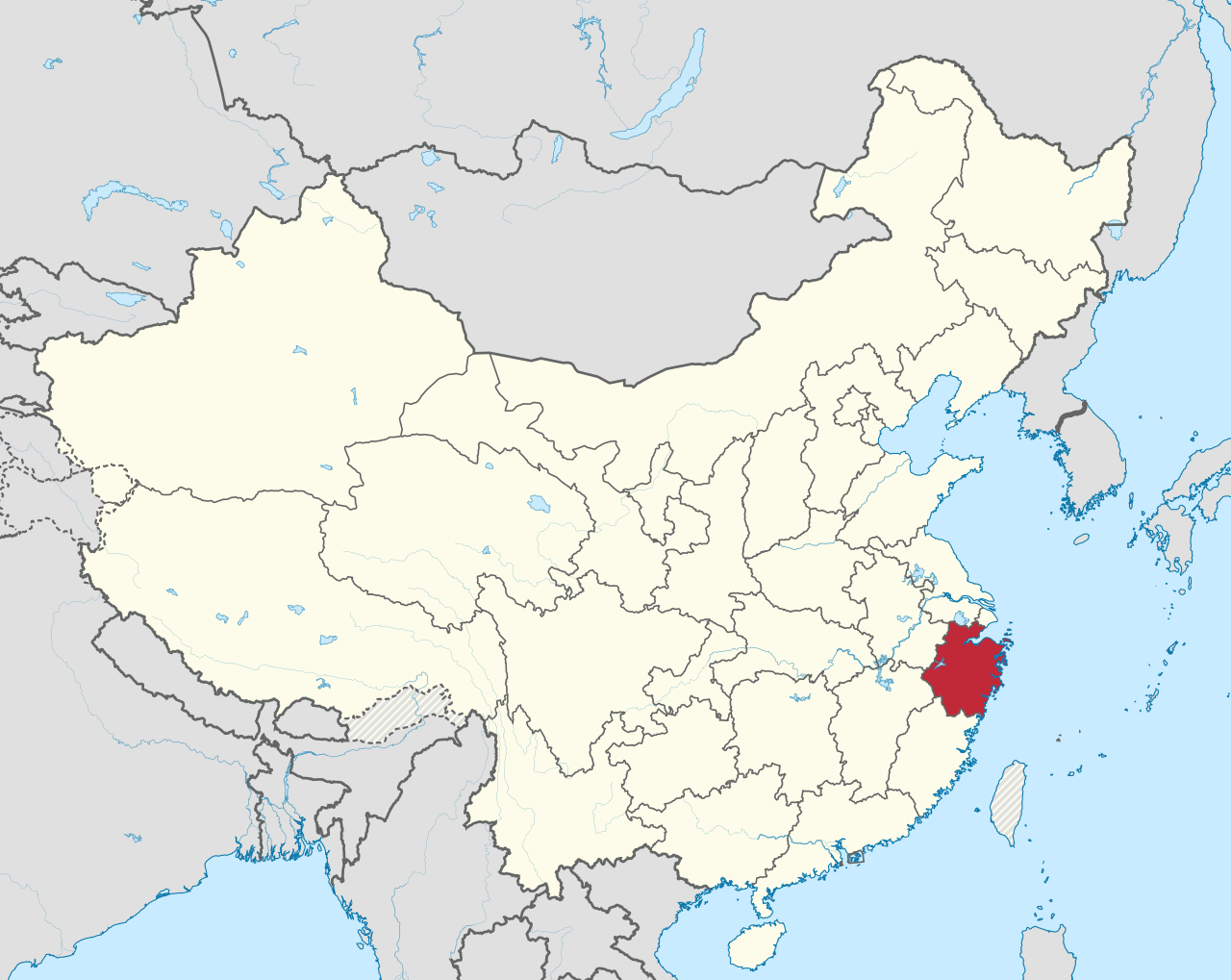
Zhejiang
Zhejiang is a coastal province in East China. Its capital and largest city is Hangzhou, and other notable cities include Ningbo and Wenzhou. Zhejiang is bordered by Jiangsu and Shanghai to the north, Anhui to the northwest, Jiangxi to the west and Fujian to the south. To the east is the East China Sea, beyond which lies the Ryukyu Islands. The population of Zhejiang stands at 64.6 million, the 8th largest in China. It has been called "the backbone of China" because it is a major driving force in the Chinese economy and being the birthplace of several notable people, including the Chinese Nationalist leader Chiang Kai-shek and entrepreneur Jack Ma. Zhejiang consists of 90 counties (incl. county-level cities and districts). The area of Zhejiang was controlled by the Kingdom of Yue during the Spring and Autumn period. The Qin dynasty later annexed it in 222 BC. Under the late Ming dynasty and the Qing dynasty that followed it, Zhejiang's ports became important centers of international trade. It was occupied by the Empire of Japan during the Second Sino-Japanese War and placed under the control of the Japanese puppet state known as the Reorganized National Government of China. After the establishment of the People's Republic of China, Zhejiang's economy became stagnant under Mao Zedong's policies. After China's economic reform, Zhejiang grew to be considered one of China's wealthiest provinces, ranking fourth in GDP nationally and sixth by GDP per capita, with a nominal GDP of US$1.14 trillion as of 2022. Zhejiang consists mostly of hills, which account for about 70% of its total area, with higher altitudes towards the south and the west. Zhejiang also has a longer coastline than any other mainland province of China. The Qiantang River runs through the province, from which it derives its name. Included in the province are three thousand islands, the most in China. The capital Hangzhou marks the end of the Grand Canal and lies on Hangzhou Bay on the north of Zhejiang, which separates Shanghai and Ningbo. The bay contains many small islands collectively called the Zhoushan Islands. Hangzhou is a historically important city, and is considered a world city with a "Beta+" classification according to GaWC.[8] It includes the notable West Lake. Various varieties of Chinese are spoken in Zhejiang, the most prominent being Wu Chinese. Zhejiang is also one of China's leading provinces in research and education. As of 2024, two major cities in Zhejiang ranked in the world's top 200 cities (Hangzhou 13th and Ningbo 123rd) by scientific research output, as tracked by Nature Index.
One-Day Zhejiang Tour Itinerary Recommendations
Theme:
Poetic Landscapes + Ancient Towns + Culinary Delights
Suitable for:
Short trips to Hangzhou/Shaoxing/Wuzhen, ideal with high-speed rail + self-driving options
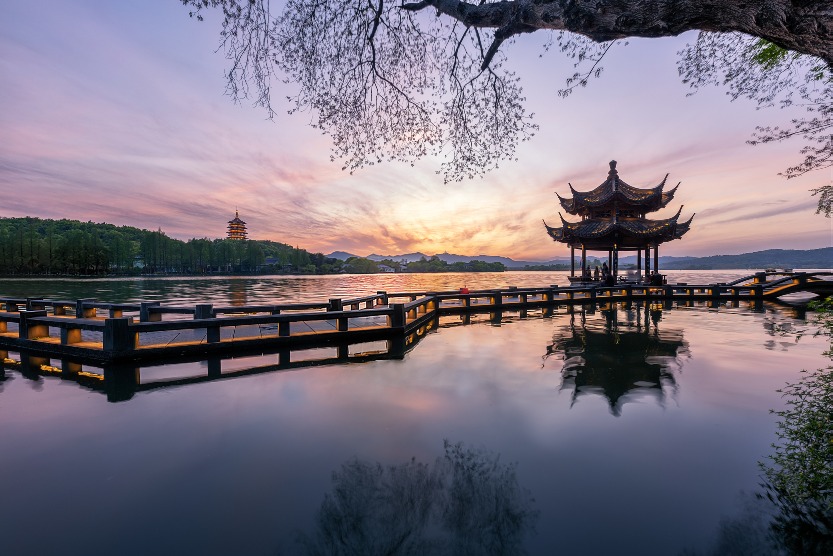
Practical Tips
Tickets:
West Lake free (some sites charge), Lingyin Temple ¥30+¥45 incense ticket, Wuzhen Xizha ¥150
Transport Hacks:
Rent shared bikes around West Lake, Shaoxing Rail Line 1 to Lu Xun's Hometown
Overnight Wuzhen guests get free shuttle rides
Food Secrets:
Hangzhou: Pian Er Chua noodles, West Lake vinegar fish (Lou Wai Lou)
Shaoxing: Shaoxing Three Delicacies, cream pagoda desserts
Wuzhen: Soy-braised duck necks, smoked bean tea
Optimization Tips:
Hangzhou alternative: Leifeng Pagoda (panoramic views) or Song Town ("Romance of Song" show)
Short on Shaoxing time? Skip East Lake for Calligrapher Wang Xizhi's neighborhood
Wuzhen deserves overnight stay - most magical at dawn without crowds
Option 1:
Hangzhou West Lake Culture & Nature
Best for:
First-time visitors, lovers of poetic scenery
Transport:
Hangzhou metro + lakeside shuttle
07:30-09:30 West Lake Classic Walk
Route: Broken Bridge → Autumn Moon on Calm Lake → Solitary Hill → Breeze-Ruffled Lotus (beautiful year-round)
10:00-11:30 China National Tea Museum (Longjing Branch)
Try Song Dynasty-style tea whisking, overlook tea terraces (best during March-April harvest)
12:00-13:30 Hangzhou Cuisine Lunch
Recommended: Tea Village Restaurant (braised mandarin fish, Longjing shrimp)
14:00-16:00 Lingyin Temple + Yongfu Monastery
Visit 1,700-year-old Buddhist sites, find "Threshold to Paradise" cliff carvings
17:00 Hefang Street Night Walk
Taste Ding Sheng cakes, try fried stuffed dough sticks, buy Wangxingji fans
Option 2:
Shaoxing Literary & Wine Culture
Best for:
Literature lovers, rice wine enthusiasts
Transport:
Hangzhou Metro Line 5 → Shaoxing Rail Transit
08:30-10:00 Lu Xun's Hometown
See the "早" character young Lu Xun carved on his desk, try aniseed beans at Xianheng Hotel
10:30-12:00 Shen Garden
Learn tragic love story of poets Lu You & Tang Wan, admire Song Dynasty layout
12:30-14:00 Shaoxing Specialty Lunch
Xun Bao Ji Restaurant (fermented amaranth with stinky tofu, drunken crab)
14:30-16:30 East Lake + Wupeng Boat
"Viewing Sky from Well" at Tao's Cave, watch foot-paddled boat skills
17:00 Huangjiu Town Tasting
Select aged Huadiao wine at Guyuelongshan Central Cellar
Option 3:
Wuzhen Water Town Dreamscape
Best for:
Photographers, culture seekers
Transport:
1.5-hour direct bus from Hangzhou Passenger Center
08:00-10:00 Dongzha Authentic Experience
Pole-acrobatic boat show, Mao Dun's former residence, try sister-in-law cakes
10:30-12:30 Xizha In-Depth Tour
Mu Xin Art Museum → Zhaoming Academy → Post postcards at Wuzhen Post Office
12:30-14:00 Floating Market Lunch
Scholar's Lamb Noodles + Ding Sheng cakes + Sanbai liquor
14:30-17:00 Handicraft Workshops
Indigo dyeing / Black pottery making (booking required)
18:00 Xizha Night Views
Lantern-lit bridges, watch gondolas pass under White Lotus Pagoda